
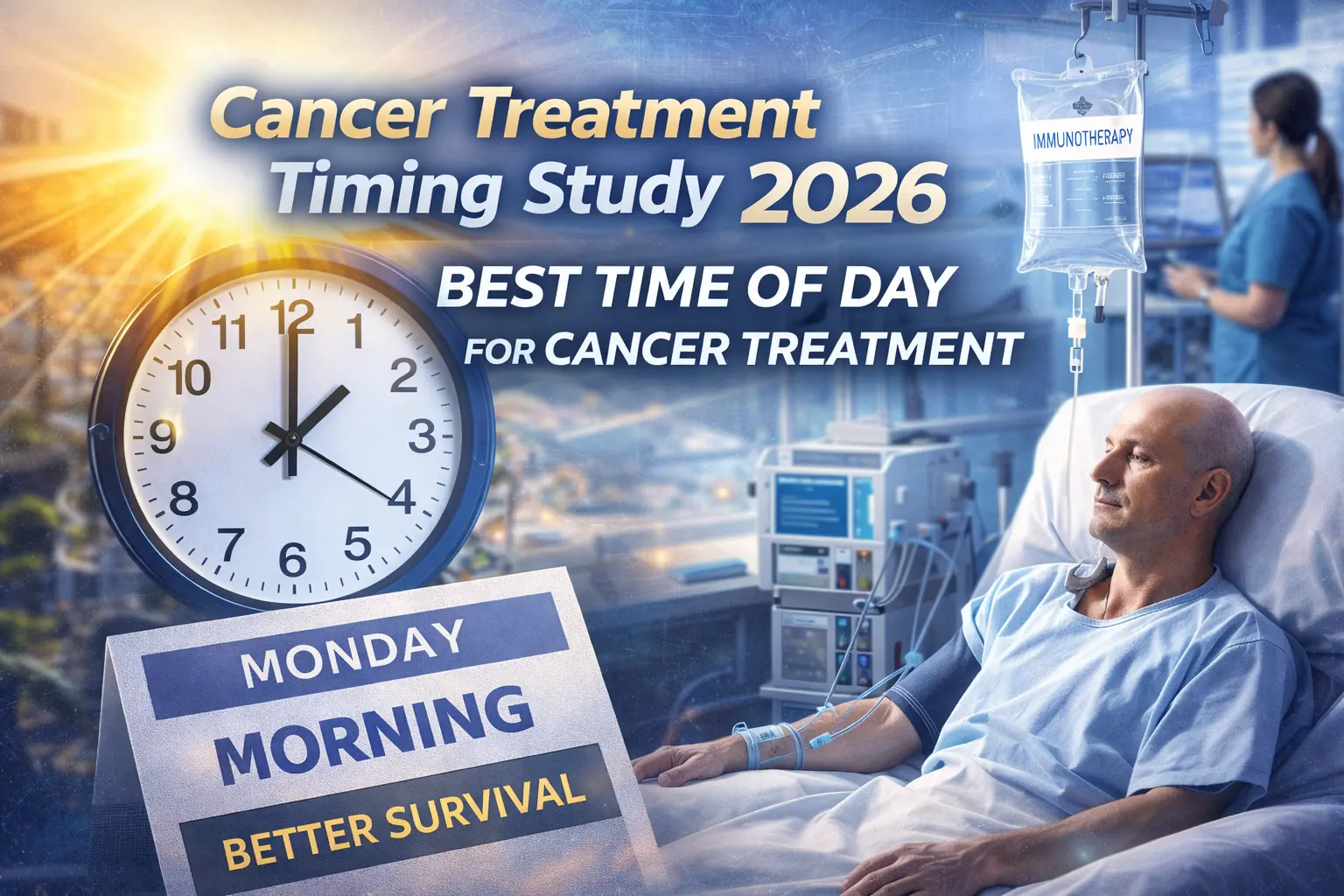
A new cancer treatment timing study 2026 suggests that when a patient receives treatment — not just what treatment they get — could influence survival outcomes. According to research reported by CNN Health, early‑day administration of immunotherapy shows striking benefits in progression‑free survival and overall life expectancy for people living with advanced forms of lung cancer.
This emerging insight highlights the growing field of chronotherapy, where clinicians aim to harness the body’s natural circadian rhythms to optimize cancer treatment effectiveness.
Nation’s Measles-Free Status in Jeopardy: How Doctors and Health Officials Are Responding
What the Cancer Treatment Timing Study 2026 Found
The cancer treatment timing study 2026 examined nearly 400 patients with extensive‑stage small‑cell lung cancer (ES‑SCLC) who received immunotherapy drugs along with chemotherapy between May 2019 and October 2023.
Participants were divided into groups based on when they received their treatment — either before 3 p.m. or later in the afternoon. Researchers found that patients treated earlier in the day had:
- Up to nearly double the progression‑free survival time
- Longer overall survival
- Lower risk of cancer progression and death, even after accounting for other factors.
Why Timing Matters: The Body’s Internal Clock
Experts involved in the cancer treatment timing study 2026 believe the benefits stem from the body’s circadian rhythm — the biological clock that regulates immune function, hormone release, and metabolic activity throughout the day.
Research shows that immune cells, including cancer‑fighting T cells, are more active earlier in the day, meaning treatments like immunotherapy could be more effective when administered in that window.
Dr. Jeffrey Haspel, a pulmonologist studying circadian rhythms, explained that the initial encounter between the tumor, drug, and immune cells may set the stage for long‑term treatment success.
Morning Treatments and Improved Survival
The cancer treatment timing study 2026 showed that patients receiving their first treatment session before 3 p.m. lived longer on average — by months or even more than a year — compared to those treated later.
For example:
- Progression‑Free Survival: Early treatment nearly doubled the time before tumors began growing again.
- Overall Survival: Patients treated earlier were significantly more likely to be alive at the study’s end.
These results suggest that even simple scheduling changes could have meaningful impacts on outcomes without new drugs or therapies.
US Withdraws from World Health Organization: 7 Key Impacts on Global Health
Chronotherapy: Aligning Treatment With Biology
The field of chronotherapy explores how biological rhythms influence drug effectiveness. In cancer care, this concept challenges doctors to consider not just the right treatment, but the right time to administer it.
According to other studies, many cancer drugs — especially immunotherapies — may be more potent when timed to align with peak immune activity earlier in the day.
Implications for Patients and Providers
While the cancer treatment timing study 2026 offers promising data, experts caution that more research is needed to confirm these findings and develop clinical guidelines.
Adjusting treatment schedules could present logistical challenges for clinics, and not all cancers may respond the same way to timing adjustments. Yet this approach represents a low‑cost, potentially high‑impact method to enhance cancer care.
Current Limitations and Future Research
The study’s retrospective design — reviewing past patient records — means it cannot definitively prove cause and effect. Larger, prospective clinical trials are underway to verify whether morning treatment schedules should become standard practice.
Researchers also note that individual factors like lifestyle, chronotype (whether someone is a morning person or night owl), and clinic workflow could affect outcomes and optimal timing.
Conclusion
The cancer treatment timing study 2026 underscores the importance of timing in cancer therapy — a factor often overlooked in traditional treatment planning.
By aligning treatment with the body’s circadian rhythms, especially in lung cancer immunotherapy, patients may experience longer survival and improved outcomes. While more research is needed before time‑of‑day scheduling becomes a universal standard, this research opens a new avenue in personalized cancer care.






Leave a Reply