
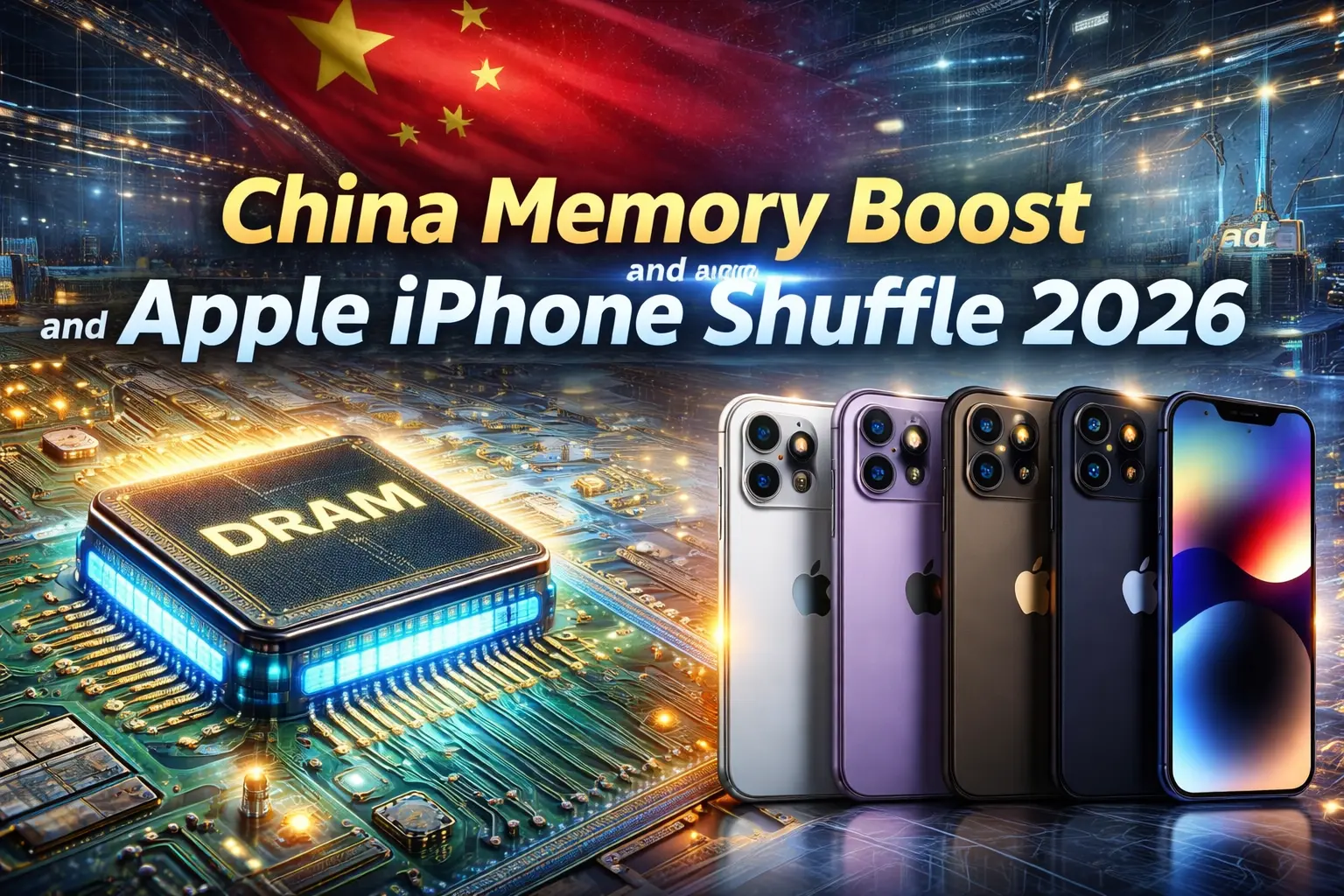
The China memory boost and Apple iPhone shuffle 2026 marks a pivotal moment in global tech markets. China’s aggressive investment in memory chip production, coupled with Apple’s strategic iPhone manufacturing adjustments, is reshaping supply chains, innovation cycles, and opportunities for US technology companies. As the world increasingly relies on high-performance memory for smartphones, servers, and AI applications, this shift highlights how supply, demand, and strategic partnerships are evolving.
Qatar AI Sovereignty: Leading the Gulf’s AI Revolution
What Is the China Memory Boost?
China has ramped up its memory chip production to reduce reliance on foreign suppliers and strengthen its semiconductor sector. The China memory boost and Apple iPhone shuffle 2026 initiative includes:
- Massive expansion of DRAM and NAND production facilities
- Government-backed incentives for chipmakers
- Investment in AI-optimized memory technologies
For US tech companies, this memory surge signals both competition and opportunity in the semiconductor landscape.
Apple iPhone Shuffle Explained
The Apple iPhone shuffle refers to Apple reorganizing its iPhone production across China and other regions due to supply chain disruptions, global demand fluctuations, and trade tensions. Key changes include:
- Shifting assembly lines to balance production costs and tariffs
- Prioritizing high-demand models for US and European markets
- Integrating locally sourced components to reduce dependency
The combined effect of China memory boost and Apple iPhone shuffle 2026 creates a dynamic scenario for both manufacturers and consumers.
South Korea’s Battery Makers Eye Robot Market as EVs Slump
Why This Matters for the US Market
1. Tech Innovation
With China increasing memory output, US firms can access more competitive chips, fueling innovation in AI, data centers, and smartphones.
2. Supply Chain Adjustments
Apple’s shuffle provides insights for US suppliers on inventory management, component sourcing, and logistics optimization.
3. Investment Opportunities
The memory boost opens avenues for American investors and tech companies to partner with Chinese manufacturers or develop complementary products.
Impact on Smartphones and AI Devices
High-performance memory is critical for modern devices. The China memory boost and Apple iPhone shuffle 2026 affects:
- Faster iPhones with improved multitasking capabilities
- AI-driven apps requiring high-speed DRAM
- Gaming devices and smart home systems needing efficient NAND storage
Strategic Implications for Businesses
Businesses must monitor the China memory boost and Apple iPhone shuffle 2026 to stay competitive:
- US chip designers can leverage new memory tech
- Tech retailers should anticipate iPhone model availability
- Startups in AI and IoT can plan production and storage strategies
Best TVs for Streaming, Gaming and Sports in 2026
Challenges and Risks
Despite opportunities, there are challenges:
- Trade tensions between China and the US could impact exports
- Memory oversupply may temporarily depress prices
- Apple’s production shuffle may lead to regional supply bottlenecks
Future Outlook
The China memory boost and Apple iPhone shuffle 2026 is likely to continue influencing global tech:
- Increased memory competition will drive innovation
- Apple’s adaptive production strategy may become a model for other manufacturers
- US businesses will need to align with emerging trends in semiconductors and consumer electronics
Key Takeaways
- China’s memory boost strengthens semiconductor independence and global market influence.
- Apple’s iPhone shuffle ensures production flexibility amid global uncertainty.
- US tech companies can benefit from new memory technologies and adaptive production strategies.
- Market vigilance is critical as supply chains evolve.
- AI, smartphones, and IoT devices will increasingly rely on these developments.







Leave a Reply