
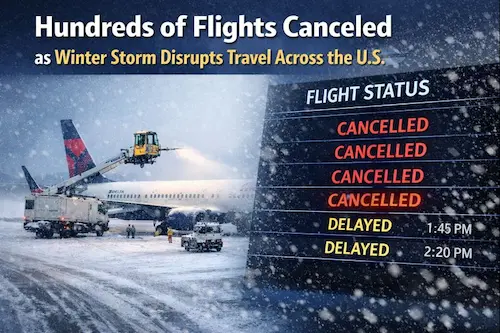
Severe Winter Weather Disrupts US Air Travel
Strong winter weather continued to disrupt air travel across the United States on Monday, December 29, as millions of travelers returned from post-Christmas holidays. Snowstorms, high winds, and freezing rain caused widespread flight cancellations and delays, affecting major airports nationwide.
The Midwest and Great Lakes regions were hit by heavy snowfall and strong winds, while a powerful winter rainstorm impacted the Northeast and parts of the Southern U.S., making flying conditions unsafe.
Flight Cancellations and Delays: Latest Numbers
According to FlightAware, as of 3:00 p.m. ET, approximately:
- 740 flights were canceled across the United States
- 5,700+ flights were delayed by at least 15 minutes
Among major carriers, Delta Air Lines reported the highest disruption, with nearly 4% of its scheduled flights canceled due to weather conditions.
What to Do If Your Flight Is Canceled or Delayed
If your travel plans are affected, it’s important to know your rights as a passenger.
Passenger Rights for Canceled Flights
According to the U.S. Department of Transportation (DOT):
- Passengers are entitled to a full refund if their flight is canceled and they choose not to travel
- Travelers may decline airline credits or vouchers and request a refund instead
- If continuing travel, passengers are eligible for penalty-free rebooking on the next available flight
Compensation During Weather-Related Delays
Since winter weather is considered outside the airline’s control, passengers are not entitled to additional compensation, such as:
- Hotel accommodations
- Meal vouchers
- Ground transportation reimbursement
However, policies may vary by airline.
Check Airline Delay and Cancellation Policies
Passengers can visit the DOT Consumer Dashboard to review what services each airline has committed to offering during flight delays and cancellations. This tool helps travelers compare airline policies transparently.
Are Airlines Offering Travel Waivers?
At this time, no major U.S. airlines have announced travel waivers related to the current winter storm. However, travelers impacted by cancellations or delays should still receive rebooking options directly from their airline.
Passengers are advised to:
- Monitor flight status frequently
- Arrive early at the airport
- Contact airlines via apps or customer support for faster rebooking
Final Thoughts
With winter weather continuing across large parts of the U.S., travelers should expect ongoing disruptions. Staying informed, understanding passenger rights, and maintaining flexibility can help reduce travel stress during severe weather events.






Leave a Reply