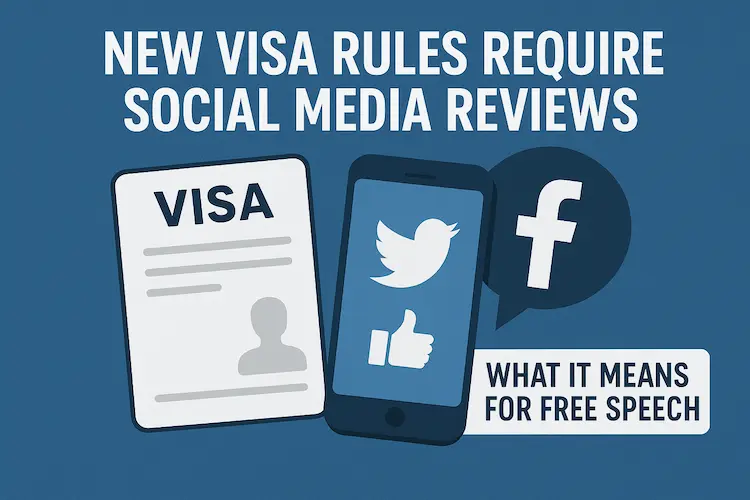
The U.S. State Department has implemented new visa rules requiring social media reviews, raising questions about privacy and free speech for visa applicants. The policy officially took effect on December 15 and significantly expands how the U.S. government evaluates applicants’ online activity.
What Are the New Visa Social Media Rules?
Under the updated policy, applicants for certain U.S. visas will have their social media presence reviewed as part of the visa screening process. Previously, online reviews mainly applied to foreign students and exchange visitors.
Now, the requirements have expanded to include:
- All H-1B visa applicants, who work in specialty occupations
- Dependents of H-1B visa holders
The H-1B visa program allows foreign professionals temporary entry into the United States to fill highly skilled roles in fields such as technology, engineering, and healthcare.
Applicants Must Set Social Media Accounts to Public
The State Department announced the policy in early December, stating that visa applicants are “instructed to adjust the privacy settings on all of their social media profiles to ‘public’” to allow government officials to conduct thorough reviews.
According to the department, the move is intended to strengthen national security measures.
“The Trump Administration is focused on protecting our nation and our citizens by upholding the highest standards of national security and public safety through our visa process,” a State Department spokesperson told pillarperspectives.com.
“A U.S. visa is a privilege, not a right.”
Policy Comes After Major Changes to H-1B Visa Program
The expanded social media screening comes just months after former President Donald Trump introduced a $100,000 annual application fee for H-1B visas, a proposal that sparked widespread debate among employers, immigration advocates, and legal experts.
Together, the fee increase and enhanced vetting signal a stricter approach to employment-based immigration.
Free Speech and Legal Concerns
The new rules have renewed concerns about free speech protections, especially for non-citizens. U.S. courts have historically ruled that First Amendment rights apply to individuals lawfully present in the United States, regardless of citizenship status.
This includes a September ruling by a federal district judge, who blocked efforts by the Trump administration to deport non-citizen student protesters over pro-Palestine speech, affirming constitutional protections for lawful residents.
Legal experts argue that broad social media monitoring could have a chilling effect on speech, particularly for visa holders who fear their online opinions could impact their immigration status.
What This Means for Visa Applicants
For visa applicants, especially H-1B workers and their families, the new policy means:
- Increased scrutiny of online activity
- Reduced privacy on social media platforms
- Greater uncertainty about how posts, likes, or comments may be interpreted
As immigration enforcement evolves, the balance between national security and free expression remains a central issue in U.S. visa policy debates.




Leave a Reply