
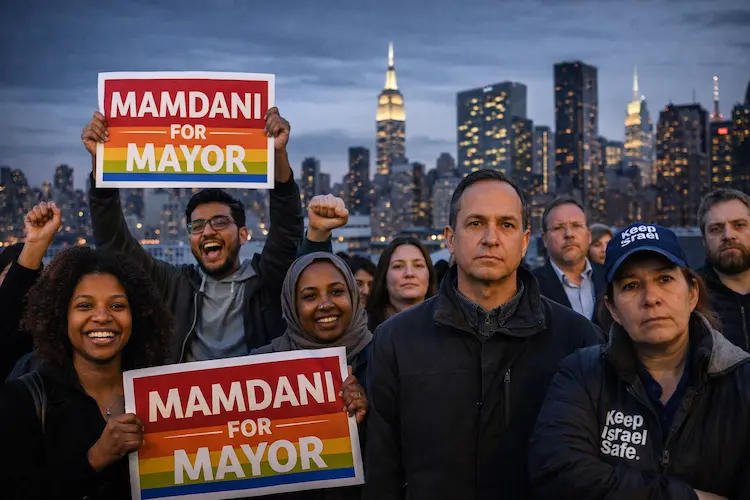
Nearly half of New York City voters cast their ballots against Zohran Mamdani, the city’s incoming mayor, raising important questions about how political opposition will shape his term in office.
Mamdani, 34, is set to become New York City’s mayor on January 1, marking a historic moment as the city’s first Muslim and first South Asian mayor. While progressives celebrated his victory, the election results revealed a deeply divided electorate.
A Narrow Victory in a High-Turnout Election
Zohran Mamdani secured just under 51% of the vote, while more than 49% of voters opposed him, largely supporting former New York Governor Andrew Cuomo, who ran as an independent after losing the Democratic primary. A smaller but notable share voted for Republican candidate Curtis Sliwa.
More than 2 million New Yorkers participated, making it the highest turnout for a city election in over 50 years. Political analysts say the turnout reflected not only enthusiasm for Mamdani, but also strong motivation among voters who wanted to block his rise.
A City Split by Geography and Ideology
Mamdani’s strongest support came from younger voters, progressives, and diverse communities in Brooklyn and South Asian neighborhoods of Queens. However, he faced stiff resistance in more suburban, middle-class outer boroughs, where moderate Democrats and independents voiced concern over his policies.
Many voters were uneasy with Mamdani’s democratic socialist platform, particularly his proposals for expanding social programs such as universal childcare. Others criticized his past positions calling to defund the police and his support for boycotting Israel.
Democrats Divided
Even within the Democratic Party, Mamdani’s candidacy sparked controversy. Moderate Democrats worried that his progressive agenda could alienate swing voters and weaken the party’s position in future elections.
“They’re going to have to live with him, and they’re going to be watching him very carefully,” said Hank Sheinkopf, a longtime political consultant who opposed Mamdani’s campaign.
What Will Opponents Do Now?
As Mamdani prepares to take office, voters who opposed him are weighing their next steps. Some have already begun protesting, particularly over foreign policy issues involving Israel. Others are shifting focus toward supporting moderate Democrats in upcoming midterm elections, hoping to counterbalance his influence.
With both strong support and intense opposition, Mamdani enters City Hall under greater scrutiny than most recent mayors. How he governs may determine whether resistance softens — or grows — over the next four years.
Zohran Mamdani’s election highlights a shifting political landscape in New York City — one energized by progressives but constrained by deep divisions among voters. Whether opposition turns into organized resistance or cautious cooperation will shape the future of his mayoralty.





Leave a Reply