
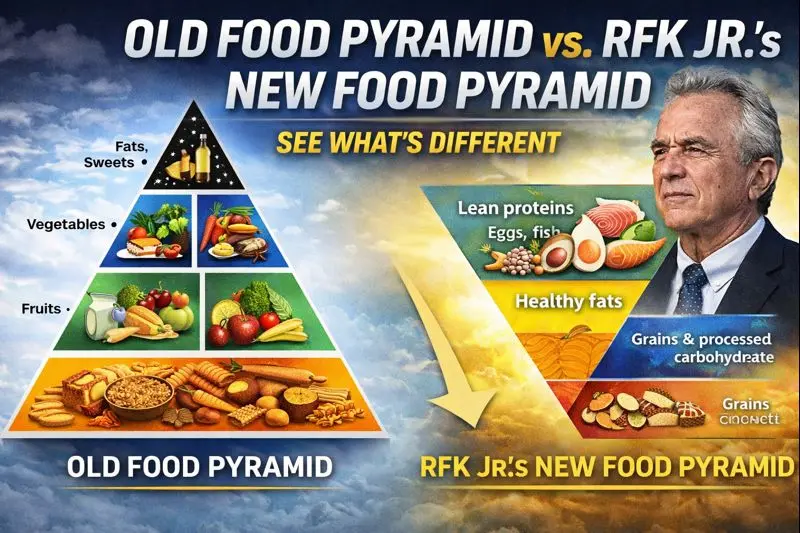
The U.S. Department of Agriculture (USDA) released updated dietary guidelines on Wednesday, January 7, unveiling a new food pyramid that looks dramatically different from the version many Americans grew up with.
The revised guidance places a strong emphasis on protein and healthy fats while significantly reducing the role of grains—marking a major shift from decades of federal nutrition advice. Visually and nutritionally, the updated pyramid is almost a complete inverse of the traditional model.
During a White House press briefing, Press Secretary Karoline Leavitt praised the changes, saying the new recommendations align with President Donald Trump and Health Secretary Robert F. Kennedy Jr.’s pledge to “Make America Healthy Again.”
“As Secretary of Health and Human Services, my message is clear: eat real food,” Kennedy said, describing the update as “the most significant reset of federal nutrition policy in history.”
From the Old Pyramid to the New One
If you remember the food pyramid from the late 1990s and early 2000s—where grains formed the foundation of a healthy diet—the new version may take some getting used to.
The United States actually moved away from the pyramid model in 2011, replacing it with the MyPlate visual. Under RFK Jr.’s leadership at HHS, the government has now returned to the pyramid, but with a striking twist.
What Does the New Food Pyramid Look Like?
The new pyramid is flipped upside down.
- Foods recommended in higher amounts appear at the top
- Foods to be limited are placed at the bottom
At the top of the inverted pyramid are:
- Lean proteins
- Eggs
- Fish
- Healthy fats
Meanwhile, grains and processed carbohydrates, once the cornerstone of the old pyramid, are now positioned at the bottom, signaling reduced consumption.
A Broader Nutrition Policy Shift
The food pyramid overhaul comes amid broader changes in federal health messaging. Recent updates to official language on public health websites have also sparked controversy among experts.
👉 Related Reading:
CDC Website Wording Change Sparks Outrage Among Public Health Experts
Why the Change Matters
Supporters argue the new model reflects modern research on metabolic health, obesity, and chronic disease, while critics warn that such dramatic reversals could confuse the public.
Either way, the new food pyramid represents a clear departure from past guidance and signals a broader philosophical shift toward whole foods and reduced reliance on carbohydrates.







Leave a Reply