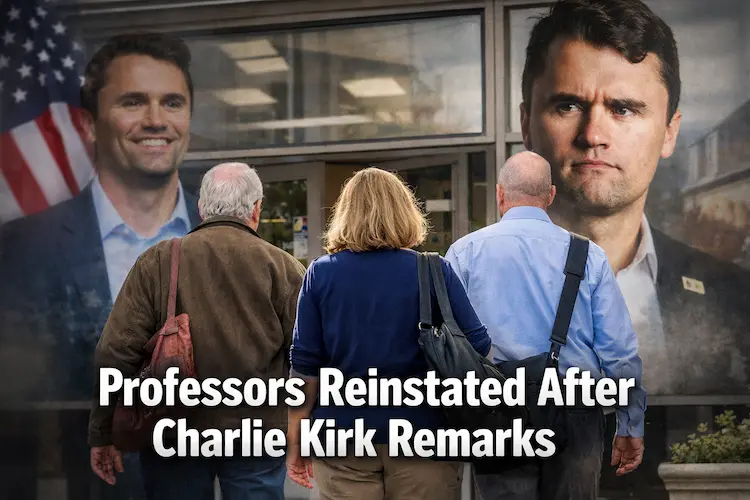
In the months following the death of conservative activist Charlie Kirk, several public universities across the United States took swift disciplinary action against faculty members who criticized him online. Now, amid legal pressure and growing concerns over free speech, a number of those decisions are being reversed.
Multiple professors who were fired or suspended for their remarks are now returning to their positions, raising renewed debate about free speech at public universities and the limits of employer authority over personal expression.
Professors Fired for Charlie Kirk Remarks Face Reversals
At least three professors who were terminated after posting critical comments about Kirk have since been reinstated. Additionally, three other university employees have had suspensions lifted or investigations resolved in their favor.
One high-profile case involved Darren Michael, a faculty member at Austin Peay State University in Tennessee. Michael not only regained his position but also secured a $500,000 settlement from the public university, according to reporting by The Tennessean, part of the Pillar Perspectives Network.
The growing list of reversals suggests that universities may have acted too hastily in punishing employees for speech protected under the First Amendment.
Charlie Kirk Death Controversy Sparks Nationwide Fallout
The controversy began after the assassination of Charlie Kirk, a nationally recognized conservative figure with millions of social media followers and close ties to the Trump administration. Following his death, hundreds of individuals across the country reportedly lost their jobs after making critical or disrespectful comments online.
A Reuters investigation found that employers in various industries terminated workers for remarks about Kirk. However, public universities faced particular scrutiny because of their role as government institutions bound by constitutional free speech protections.
Free Speech at Public Universities Under the Spotlight
Universities often describe themselves as spaces for open debate and intellectual inquiry, where controversial ideas are challenged rather than punished. Critics argue that firing professors for online speech contradicts these principles.
Legal experts emphasize that the First Amendment protects government employees when they speak as private citizens on matters of public concern. According to free speech advocates, the killing of a prominent political figure clearly qualifies as such an event.
Professors Reinstated After Legal Pressure
In many cases, reinstatements followed legal challenges or the threat of lawsuits. Attorneys representing faculty members argued that universities violated constitutional rights by disciplining employees for personal opinions expressed outside the workplace.
Importantly, many of the affected professors posted their comments on personal social media accounts, not in an official capacity or on behalf of their institutions. This distinction played a key role in legal decisions favoring reinstatement.
First Amendment and Academic Freedom Explained
Experts on First Amendment academic freedom note that public universities must meet a high legal standard before disciplining employees for speech. While institutions can regulate speech that directly disrupts operations, expressing opinions on public issues is generally protected.
The recent reversals reinforce long-standing legal precedent that public employers cannot punish workers simply for holding unpopular or controversial views.
Universities Reconsider Policies on Employee Speech
The fallout from the Charlie Kirk controversy is prompting universities to reevaluate internal policies governing faculty conduct on social media. Some institutions are revising guidelines to better balance reputational concerns with constitutional obligations.
Administrators now face increased pressure to ensure disciplinary actions comply with free speech law, especially as public scrutiny and legal risks grow.
The reinstatement of professors fired for criticizing Charlie Kirk highlights the ongoing tension between institutional reputation and constitutional rights. As courts and settlements increasingly favor faculty members, universities are being reminded that free speech protections do not end at the campus gate.
For public institutions, the message is clear: academic freedom and First Amendment rights remain central pillars of higher education, even during moments of national controversy.






Leave a Reply