
Supreme Court Trump Tariffs Poll Reveals Shocking Shift in U.S. Public Opinion
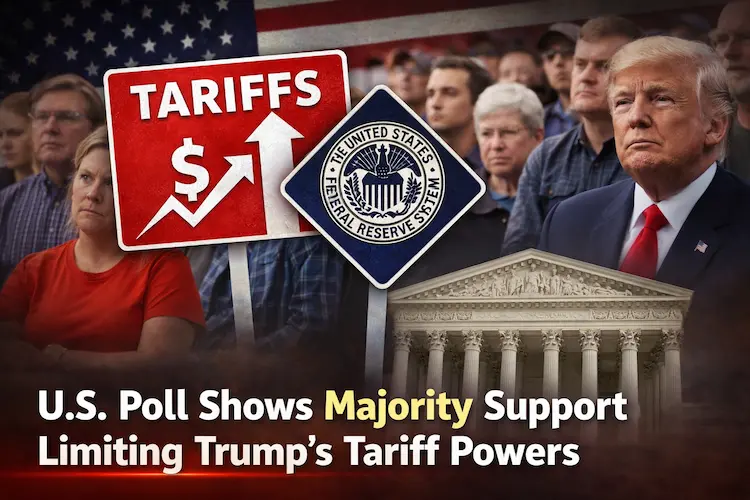
Supreme Court Trump Tariffs Poll shows that a growing number of Americans want clear limits on presidential tariff authority while strongly supporting the independence of the Federal Reserve, according to a new national survey conducted in the United States.
What the Supreme Court Trump Tariffs Poll Is About
The Supreme Court Trump Tariffs Poll focuses on how U.S. adults view presidential power, trade tariffs, and the role of the Supreme Court in limiting executive authority.
Supreme Court Trump Tariffs Poll Shows Majority Want Limits on Presidential Power
Results from the Supreme Court Trump Tariffs Poll reveal that most Americans believe the Supreme Court should restrict the president’s ability to impose tariffs without congressional oversight.
Public Reaction to Trump’s Tariff Authority in the Supreme Court Trump Tariffs Poll
The Supreme Court Trump Tariffs Poll indicates that many voters feel unchecked tariff authority can negatively impact the economy, consumers, and small businesses.
Economic Impact Highlighted in the Supreme Court Trump Tariffs Poll
According to the Supreme Court Trump Tariffs Poll, a majority of respondents believe tariffs increase prices and place financial pressure on American households.
Federal Reserve Independence in the Supreme Court Trump Tariffs Poll
Another major finding of the Supreme Court Trump Tariffs Poll is strong public support for keeping the Federal Reserve independent from presidential control.
Why Americans Trust the Federal Reserve More Than Political Control
The Supreme Court Trump Tariffs Poll shows Americans believe economic stability depends on expert-led monetary policy rather than political influence.
Supreme Court Authority and Constitutional Balance
The Supreme Court Trump Tariffs Poll highlights public trust in the Supreme Court as a key institution responsible for maintaining constitutional checks and balances.
Presidential Compliance with Supreme Court Decisions
Most respondents in the Supreme Court Trump Tariffs Poll agree that the president must follow Supreme Court rulings, even when decisions are politically unfavorable.
Partisan Differences in the Supreme Court Trump Tariffs Poll
While opinions vary by political affiliation, the Supreme Court Trump Tariffs Poll reveals agreement across parties on limiting excessive executive power.
Independent Voters and the Supreme Court Trump Tariffs Poll
Independent voters surveyed in the Supreme Court Trump Tariffs Poll largely favor judicial limits and economic stability over expanded presidential authority.
Why the Supreme Court Trump Tariffs Poll Matters for the U.S. Economy
The Supreme Court Trump Tariffs Poll reflects growing concern that aggressive tariff policies could harm long-term economic growth and trade relationships.
Potential Impact on Future Trade Policies
Findings from the Supreme Court Trump Tariffs Poll may influence how future administrations approach trade negotiations and tariff enforcement.
Public Confidence in Judicial Oversight
The Supreme Court Trump Tariffs Poll shows Americans still see the judiciary as a necessary safeguard against misuse of executive power.
How the Supreme Court Trump Tariffs Poll Shapes Political Debate
Political analysts say the Supreme Court Trump Tariffs Poll will likely shape debates over trade, inflation, and institutional independence in upcoming elections.
Final Thoughts on the Supreme Court Trump Tariffs Poll
The Supreme Court Trump Tariffs Poll clearly demonstrates that Americans want limits on presidential tariff authority, strong judicial oversight, and an independent Federal Reserve to protect economic stability and democratic balance.







Leave a Reply