
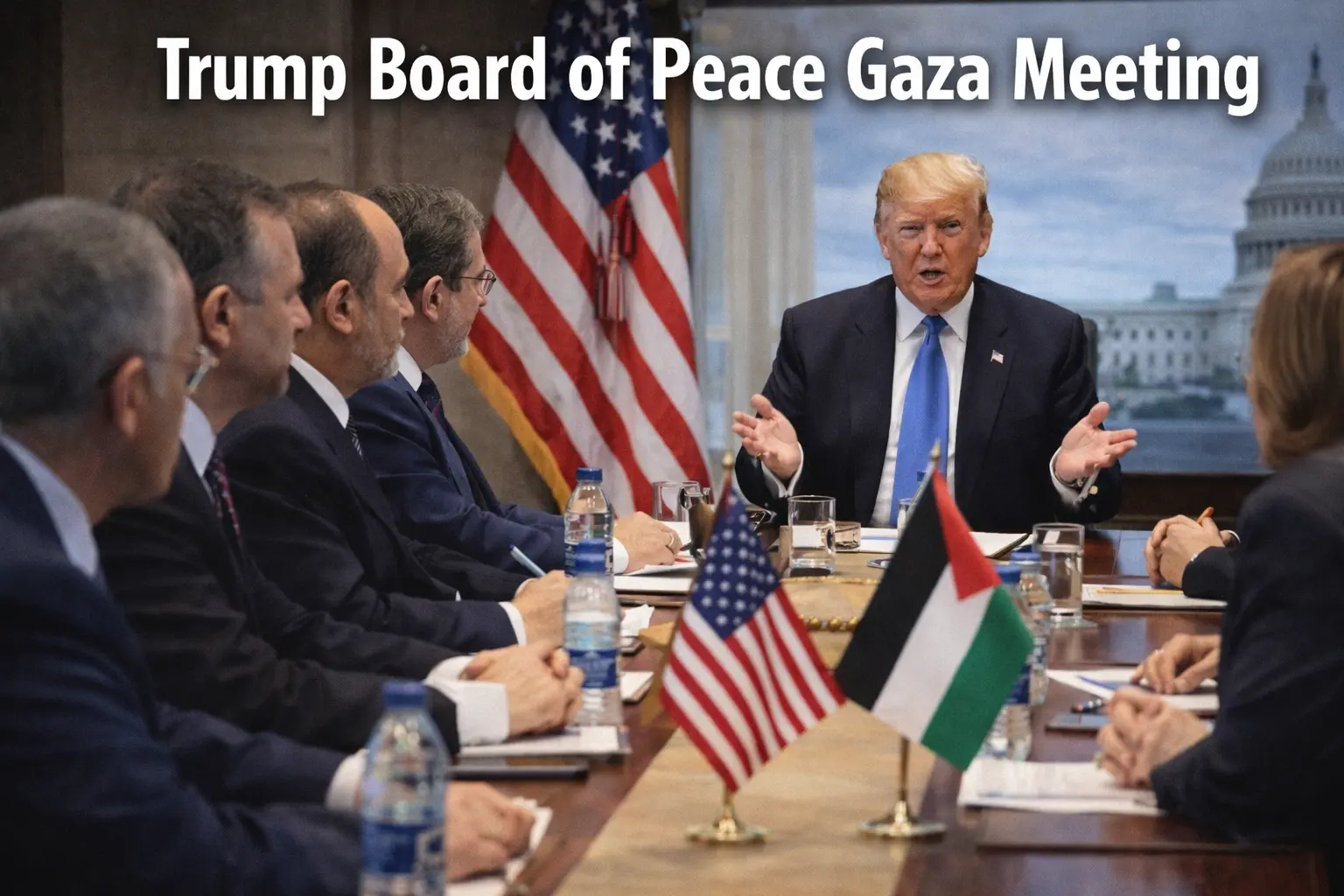
The Trump Board of Peace Gaza initiative is set to convene in Washington, bringing together leaders and officials to discuss strategies for the reconstruction of Gaza. This meeting, scheduled for February 19, is intended to coordinate diplomatic and humanitarian efforts following recent conflicts in the region.
Observers note that while the Board is not a formal government body, its influence on policy-making and U.S. engagement in the Middle East is notable. Analysts are closely monitoring the meeting to assess whether it will lead to tangible progress or remain largely symbolic.
Recent controversies surrounding Trump, including the Trump Obama racist post controversy, underscore the complex domestic political landscape in which this international diplomacy is unfolding.
Background: Trump’s Board of Peace
The Trump Board of Peace was established as a platform for high-profile diplomatic engagement, particularly in conflict zones such as Gaza. Its mandate includes:
- Coordinating U.S. efforts with regional and international stakeholders
- Providing advisory recommendations for reconstruction initiatives
- Monitoring humanitarian conditions in affected areas
The Board’s convening in Washington marks the first major gathering since its formation, highlighting Trump’s continued interest in Middle East policy despite domestic political controversies, such as Trump breaking with the NRA in 2026.
US-Iran Nuclear Talks Oman 2026
Purpose of the Washington Meeting
The February 19 meeting aims to:
- Review the current situation in Gaza following recent hostilities
- Coordinate reconstruction plans and aid distribution
- Engage with regional leaders and international partners to ensure effective implementation
Officials have emphasized that the Board seeks a neutral and constructive approach, focusing on humanitarian outcomes rather than political messaging.
Key Participants
The Board will include:
- Former government officials with experience in Middle East diplomacy
- Representatives from international humanitarian organizations
- Regional stakeholders, including advisors from allied nations
While Trump himself is expected to attend, the Board is designed to operate through a collaborative process that allows multiple voices to contribute to the Gaza reconstruction agenda.
Diplomatic and Political Implications
The Trump Board of Peace Gaza meeting carries several diplomatic and political implications:
- International Relations: The gathering may influence U.S. relationships with Israel, Palestine, and regional allies.
- Policy Direction: Recommendations from the Board could shape U.S. aid distribution and reconstruction priorities.
- Domestic Politics: Trump’s involvement in Middle East policy occurs amid domestic controversies, adding complexity to his public image.
Analysts caution that while the Board’s actions may signal U.S. engagement, achieving concrete results requires coordination with governments and international organizations directly involved in Gaza’s reconstruction.
Recent Developments in Gaza
Gaza has faced significant challenges in 2026, including:
- Damage to infrastructure and housing from conflict
- Displacement of civilians and humanitarian crises
- Urgent need for coordinated international reconstruction efforts
The Board’s convening in Washington seeks to address these issues systematically, ensuring that reconstruction projects are effective and sustainable.
Role of the U.S. and Trump Administration
Although the Board is a private initiative, it reflects the influence of Trump and his policy advisors on Middle East affairs. U.S. engagement in Gaza has historically involved:
- Diplomatic negotiations with regional partners
- Financial and humanitarian support for reconstruction
- Coordination with international organizations like the UN and Red Cross
The Board of Peace provides a unique forum where Trump’s team can directly propose strategies, monitor progress, and report findings to broader policy circles.
Expert Opinions
Dr. Emily Carter, Middle East policy analyst, said:
“The Trump Board of Peace offers a platform for U.S. engagement, but the real test will be whether it translates into actionable reconstruction plans on the ground.”
Ahmed Rahman, international relations scholar, added:
“This meeting underscores the intersection of domestic politics and foreign policy, showing how Trump leverages influence beyond official government channels.”
Anticipated Outcomes
While expectations are cautious, potential outcomes of the Washington meeting include:
- Drafting preliminary reconstruction proposals for Gaza
- Establishing working groups to implement humanitarian initiatives
- Setting the stage for follow-up meetings with international partners
The Board is also expected to produce a report summarizing key recommendations, which may inform both U.S. policy and broader international engagement.
Challenges Ahead
Several challenges may affect the effectiveness of the Board’s efforts:
- Political polarization in the U.S. may limit bipartisan support for proposals
- Coordination with multiple international stakeholders can be complex
- Ensuring transparency and avoiding politicization of humanitarian aid remains critical
Despite these hurdles, the Board represents a proactive step toward addressing urgent reconstruction needs in Gaza.
Conclusion
The Trump Board of Peace Gaza meeting in Washington marks a significant moment in U.S. diplomatic efforts in the Middle East. While the initiative faces political and logistical challenges, it has the potential to advance reconstruction efforts in Gaza and foster international collaboration.
By linking domestic political context, ongoing controversies, and international policy, this article demonstrates the multifaceted nature of Trump’s influence on global affairs and emphasizes the importance of measured, constructive diplomatic action.






Leave a Reply