
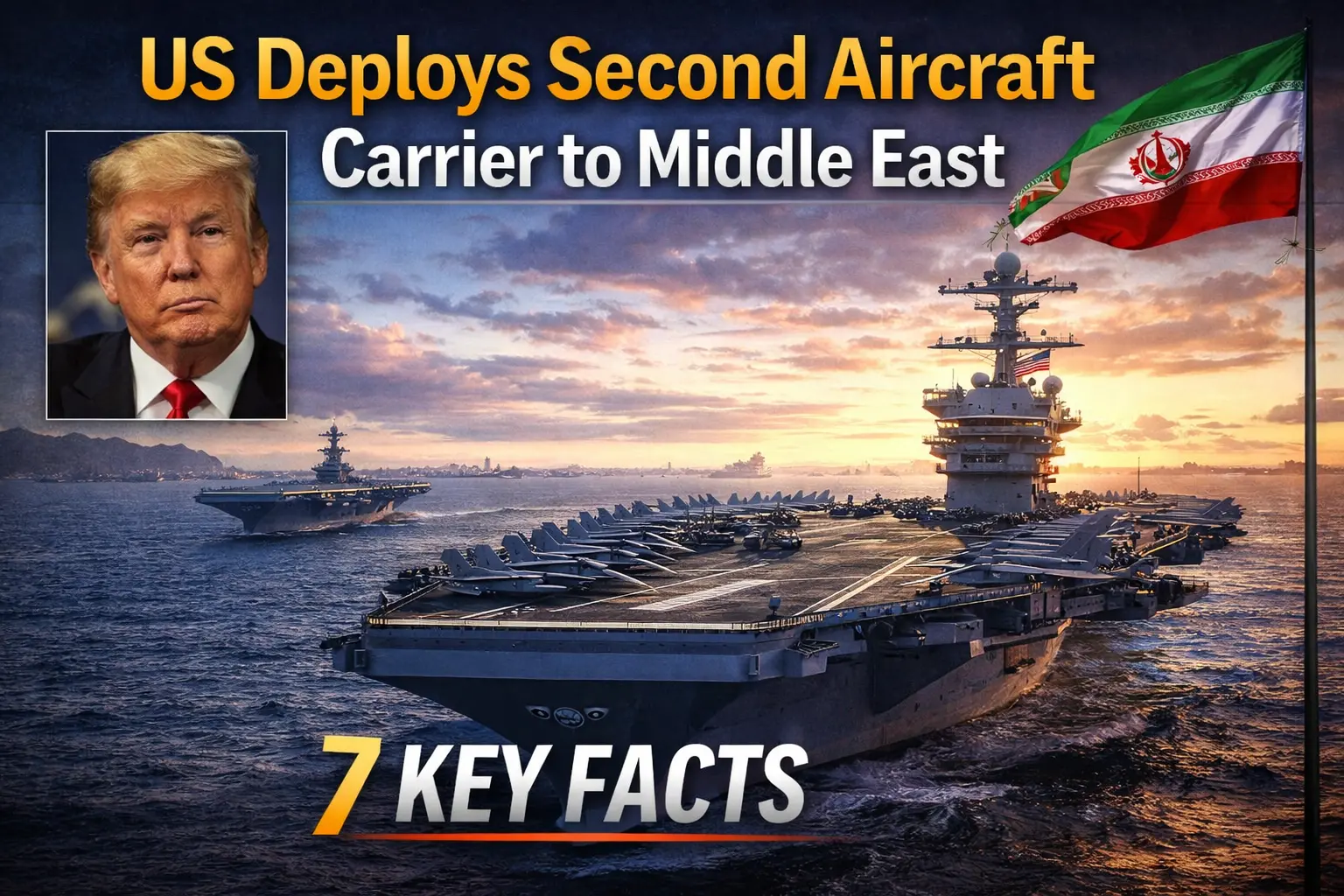
The United States has confirmed it is deploying a second aircraft carrier to the Middle East in a high-stakes show of military strength as diplomatic negotiations with Iran continue and regional tensions remain elevated. President Donald Trump announced that the USS Gerald R Ford, one of the U.S. Navy’s most advanced and powerful carriers, will soon depart from its current station and head toward the Persian Gulf, joining the existing carrier presence in the region.
1. What the Deployment Means
The decision to send an additional aircraft carrier—on top of the already-deployed USS Abraham Lincoln and its accompanying warships—aims to increase pressure on Iran while creating a formidable deterrent.
Officials describe the move as part of a dual strategy that applies military leverage while continuing diplomatic dialogue over Tehran’s nuclear and ballistic missile programs.
2. Trump’s Statement on Timing
President Trump said the USS Gerald R Ford will sail “very soon,” reflecting urgency in Washington’s approach to the Middle East at a time of ongoing negotiations.
He reiterated confidence that negotiations with Iran could be “successful” but stressed readiness to maintain a strong military posture if talks falter.
3. A Show of Force — Not an Immediate Attack
Even though the deployment underscores military resolve, officials have not framed it as preparation for imminent conflict. Rather, the build-up signals strong deterrence against actions that would destabilize the region.
Multiple U.S. naval assets, including guided-missile destroyers and surveillance aircraft, already operate nearby, creating a layered presence that can quickly adapt to changing conditions.
4. Context — Iran Negotiations and Regional Tensions
The deployment comes amid indirect talks between U.S. and Iranian officials, held recently in Oman, intended to ease long-running standoffs over Tehran’s nuclear ambitions.
While diplomacy continues, Trump’s decision reflects Washington’s intent to signal preparedness should negotiations stall.
5. What the USS Gerald R Ford Brings
As one of the world’s most advanced carriers, the USS Gerald R Ford can carry dozens of aircraft, advanced radar systems, and high-end electronic warfare capabilities—making it a potent asset in any large-scale operation.
Its deployment alongside the USS Abraham Lincoln boosts the U.S. Navy’s operational flexibility and ability to project air power across the region.
6. Reactions from Allies and Adversaries
Israeli leaders have expressed support for strong U.S. posture toward Iran, insisting any deal must address ballistic missile capabilities and support for proxy fighters.
Meanwhile, Gulf Arab states warn that escalation could lead to further regional instability, sparking international concern.
7. What Happens Next
Officials say the timeline for the Gerald R Ford’s arrival in the Middle East may take several weeks, depending on sailing orders and logistics.
U.S. military planners will likely monitor Iran’s response closely while continuing diplomatic engagement. Analysts suggest this dual approach allows Washington to keep options open if negotiations fail.
Why This Matters
The U.S. deployment of a second aircraft carrier to the Middle East represents one of the most significant military escalations since tensions over Iran’s nuclear program resurfaced. It conveys a message of deterrence while leaving room for diplomacy—an approach that could shape regional dynamics in the weeks ahead.






Leave a Reply