
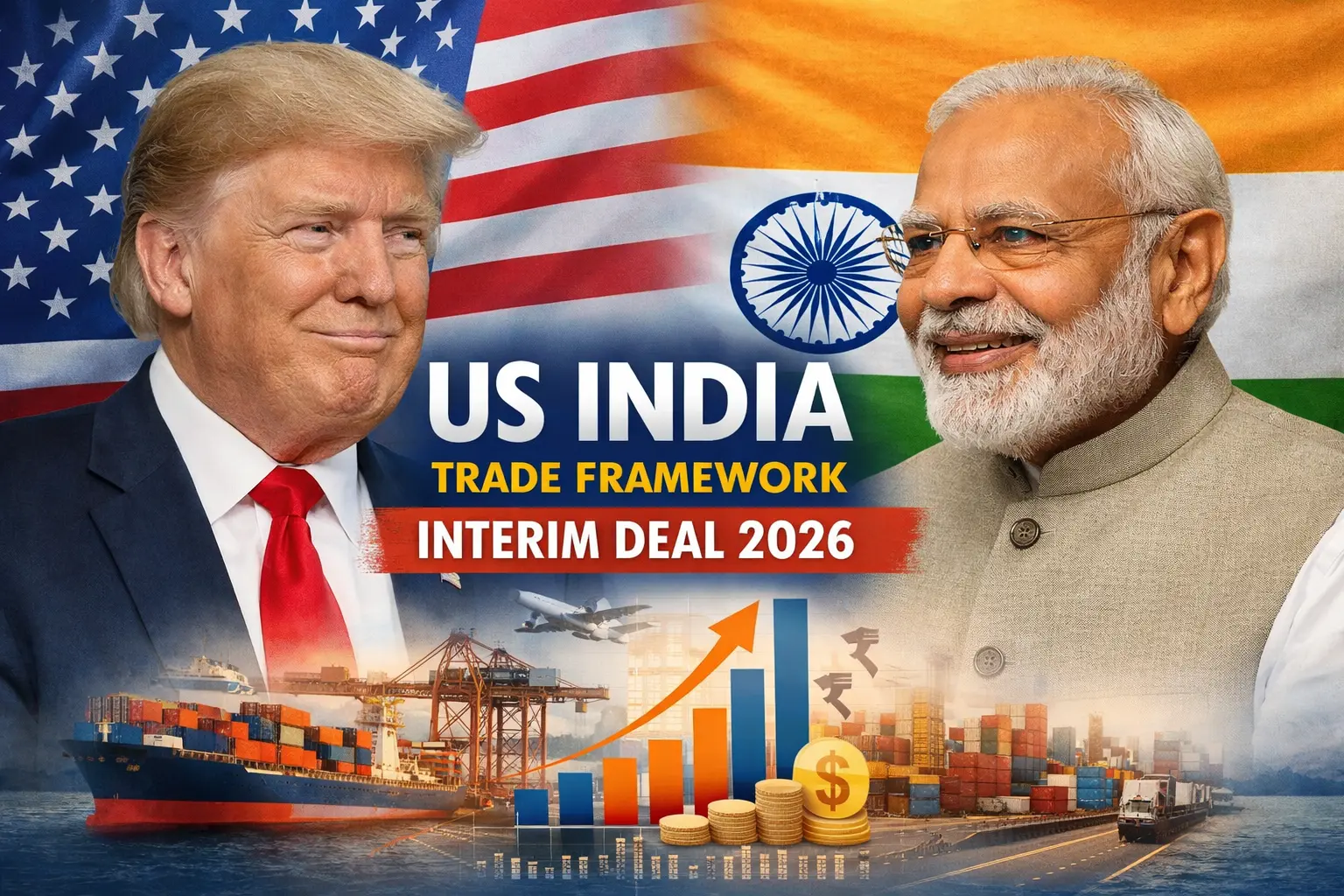
The US India Trade Framework Interim Deal 2026 marks a landmark development in global economics — bringing together the United States and India with commitments to boost trade, reduce tariffs, and deepen economic cooperation. This interim agreement is a step toward a broader bilateral trade pact that could reshape supply chains, expand market access, and open new avenues for businesses in both countries.
The US India Trade Framework Interim Deal 2026 is especially significant for American importers, exporters, manufacturers, and service providers because it offers clearer tariff structures and regulatory alignments that make trade smoother, more predictable, and future-ready. In this guide, we break down what this framework means, what’s included, and how US businesses can benefit from it.
What Is the US India Trade Framework Interim Deal 2026?
The US India Trade Framework Interim Deal 2026 is an agreement between the United States and the Republic of India that provides temporary tariff levels, market access adjustments, and cooperation structures while negotiations continue on a comprehensive bilateral deal (known as BTA).
Under this interim framework:
- Both nations agree on tariff reductions on mutual traded goods.
- The U.S. commits to apply a reciprocal tariff rate of 18% on Indian imports, down from punitive rates that previously existed.
- India agrees to eliminate or significantly reduce tariffs on a wide range of US industrial, agricultural and food products.
- The interim framework also addresses long-term non-tariff barriers and regulatory cooperation.
This framework is not the final agreement, but it serves as the backbone for future trade discussions aimed at signing a full bilateral trade agreement by March 2026.
US‑Iran Oman Nuclear Talks Conclude With Future Round Planned
Why the US India Trade Framework Interim Deal 2026 Matters
1. Tariff Simplification & Predictability
Tariff systems previously fluctuated due to retaliatory duties and sanctions. Under the interim deal, the US India Trade Framework Interim Deal 2026 introduces a more stable tariff structure — with most Indian goods entering the US with an 18% tariff and selected Indian products eventually eligible for zero tariffs.
This predictability is crucial for US manufacturers and exporters who want to plan pricing, supply chains, and long-term contracts with Indian partners.
2. Expanded Market Access for US Products
India agreed to lower or remove tariffs on a broad set of American products, including:
- Industrial machinery
- Agricultural and food goods such as tree nuts, soybean oil, and certain grains
- Medical and tech goods by reducing non-tariff barriers
This expanded market access means US exporters have enhanced entry into India’s large consumer economy, allowing expansion into sectors previously restricted by high duties or licensing issues.
3. Strengthening Supply Chain Resilience
The US India Trade Framework Interim Deal 2026 reflects a strategic realignment of global supply chains, reducing dependence on third countries and aligning standards between the U.S. and India across tech, energy, and manufacturing sectors.
For American businesses, this means:
- Better access to Indian manufacturing
- Streamlined export rules
- Opportunities in sectors like electronics, automotive parts, and raw materials
4. Support For Small & Medium Enterprises (SMEs)
A major win in the US India Trade Framework Interim Deal 2026 is the benefit to SMEs on both sides:
- US SMEs can export to India with lower barriers and clearer tariff expectations
- Indian SMEs gain access to the vast US market
Because India is one of the world’s fastest-growing economies, this interim deal puts small businesses in a better competitive position.
Trump Board of Peace Gaza: Washington Meeting to Discuss Reconstruction Efforts
5. Energy & Strategic Economic Cooperation
Another critical part of the US India Trade Framework Interim Deal 2026 is India’s commitment to purchase American energy products — something that strengthens bilateral economic dependency and energy security.
For US petrochemical and energy sectors, this means:
- Increased exports
- Stable long-term contracts
- Enhanced strategic economic ties with India
Key Highlights of the US India Trade Framework Interim Deal 2026
| Feature | Details |
|---|---|
| Tariff on Indian Imports to US | 18% Reciprocal Tariff Rate |
| Indian Tariff Reductions | Eliminated on many US industrial/agri products |
| Regulatory Cooperation | US/International safety standards for tech and medical goods |
| Market Access | Expanded for both US and Indian exports |
| Strategic Purchases | India to import energy & tech products from US |
What It Means for the US Economy
1. Export Growth
The US India Trade Framework Interim Deal 2026 gives American exporters preferential access to the Indian market at predictable tariff levels — crucial for exports in machinery, food, tech and energy sectors.
2. Supply Chain Stability
By aligning standards and removing non-tariff barriers, the deal fosters an environment where American companies can efficiently import Indian components without unpredictable customs hurdles.
3. Job Creation
Higher trade volume with India spurs job opportunities in U.S. logistics, manufacturing, technology, and energy sectors, benefiting American workers.
4. Strategic Diplomatic Gains
A strong trade framework with India boosts US geopolitical standing, balancing global partnerships and competition.
Final Thoughts
The US India Trade Framework Interim Deal 2026 stands as a major milestone in bilateral relations between two of the world’s largest economies. With reduced tariffs, better market access, and regulatory cooperation, this framework paves the way for a broader future trade pact that can fuel economic growth, enhance supply chain resilience, and unlock new opportunities for businesses in the United States and India alike.







Leave a Reply