
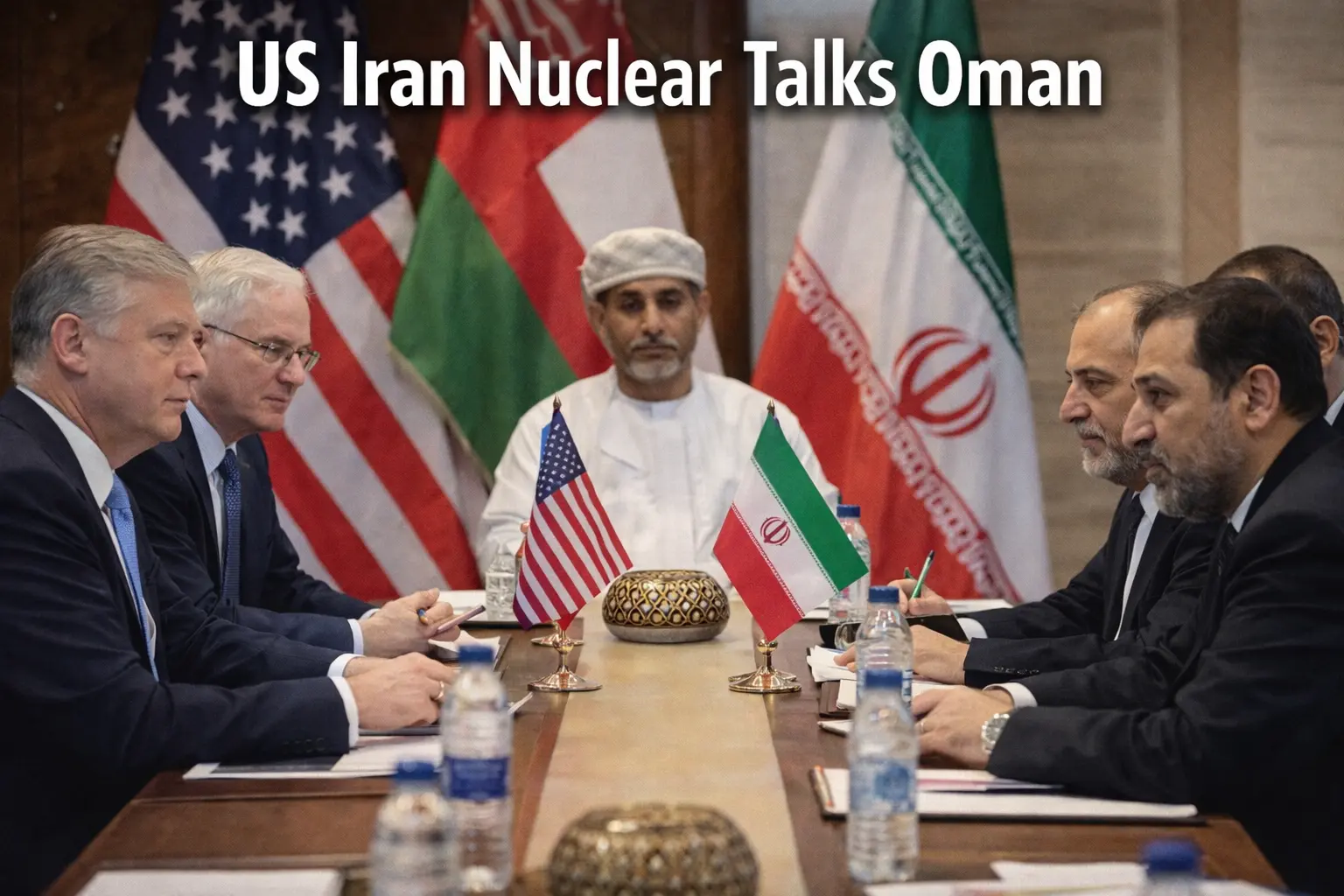
The latest US Iran nuclear talks Oman round concluded in Muscat on Friday, involving indirect negotiations between the United States and Iran over Tehran’s nuclear program. While no final agreement was reached, officials from both sides said they will continue discussions in coming days, signaling a tentative diplomatic effort amidst persistent tensions.
What Happened in Oman
US and Iranian representatives engaged in a series of indirect talks in Oman’s capital, Muscat, aimed at addressing disagreements over Iran’s nuclear ambitions. The negotiations were mediated by Oman’s foreign ministry and included key diplomatic figures from both sides.
Iran’s Foreign Minister Abbas Araghchi described the discussions as a “good start” while emphasizing the need for further consultations before formal negotiations resume. Both delegations indicated they will return to their capitals for additional planning ahead of a follow‑up meeting.
Why the Talks Matter
The US Iran nuclear talks Oman meetings come amid longstanding disagreements between Tehran and Washington. Central issues include limits on uranium enrichment, verification measures, and the potential lifting of economic sanctions in exchange for nuclear curbs.
The United States has maintained a firm stance on halting higher‑level uranium enrichment, while Iran insists on maintaining its right to a civilian nuclear program. These differences have complicated progress but highlight diplomatic engagement as a preferable alternative to conflict.
political controversies in the United States —> Trump Obama Racist Post Controversy
Statements From Officials
Iranian officials praised the talks for creating an atmosphere of mutual understanding, with Foreign Minister Abbas Araghchi acknowledging progress but stressing that key issues remain unresolved. He reiterated that negotiating the scope of Iran’s nuclear activities requires careful deliberation and continued dialogue.
Omani mediators played a key role in facilitating communication, emphasizing the importance of diplomatic patience and cooperation to resolve complex matters without escalating regional tensions.
Background: History of US‑Iran Nuclear Negotiations
Talks between Iran and the United States have a long and complex history. Previous rounds of negotiations, including earlier indirect discussions mediated by Oman and other regional partners, have aimed to address nuclear proliferation concerns and reduce the risk of conflict.
The current round in Oman marks one of the most significant diplomatic efforts since tensions escalated in 2025, drawing international attention as leaders seek to avoid further destabilization in the Middle East.
What Comes Next
Officials from both sides confirmed that they are planning another set of negotiations in the coming days. Exact dates and locations have not yet been announced, but both Iran and the United States have expressed interest in maintaining diplomatic momentum.
It remains unclear whether future talks will be direct or indirect, or whether they will include broader topics such as ballistic missile programs or regional security matters. However, analysts see continued dialogue as crucial to preventing further escalation.
recent political events in the U.S. Trump Breaks With NRA Alex Pretti Gun 2026
International and Regional Reactions
World leaders and diplomatic observers are closely watching the US Iran nuclear talks Oman, recognizing the high stakes involved. Some regional powers have offered cautious optimism, noting that diplomatic engagement — even if slow — can reduce the likelihood of armed conflict.
Conclusion
The US Iran nuclear talks Oman round represents a modest but noteworthy attempt at diplomatic engagement on one of the most pressing global security concerns. While no breakthrough has yet emerged, the promise of further discussions suggests that both sides are willing to continue negotiations. How these talks evolve in the coming weeks may have significant implications for regional stability and international nuclear non‑proliferation efforts.






Leave a Reply