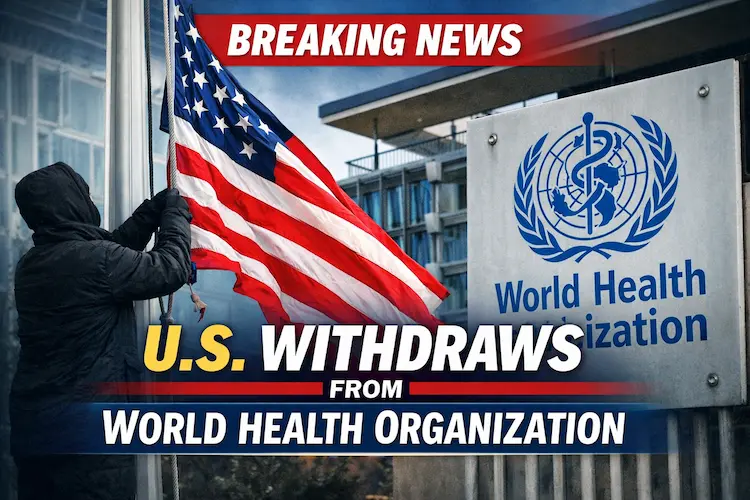
The decision as the US withdraws from World Health Organization has sent shockwaves across the global health community. On January 22, 2026, the United States officially ended its membership in the World Health Organization (WHO), marking one of the most significant shifts in international health policy in decades.
This move follows years of political tension, funding disputes, and criticism over the WHO’s handling of the COVID-19 pandemic. As the US withdraws from World Health Organization, experts warn that the consequences could reshape global disease control, research funding, and international cooperation.
Why Did the US Withdraw from World Health Organization?
The announcement came after President Donald Trump signed an executive order on the first day of his 2025 presidency. According to U.S. officials, the decision reflects long-standing concerns about transparency, accountability, and pandemic mismanagement.
Government sources stated that the US withdraws from World Health Organization because it no longer aligns with America’s public health priorities. Instead, the U.S. plans to work directly with individual countries on disease surveillance and emergency response.
Background: US–WHO Relationship Explained
For decades, the United States was the largest financial contributor to the WHO, providing hundreds of millions of dollars annually. This funding supported vaccination programs, disease prevention, and global health research.
However, tensions escalated during the COVID-19 pandemic. U.S. officials accused the WHO of delaying critical information and failing to hold member states accountable. These concerns eventually led to the decision where the US withdraws from World Health Organization entirely.
1. Impact on Global Health Funding
One of the biggest consequences as the US withdraws from World Health Organization is the sudden funding gap. The U.S. previously contributed nearly $260 million per year, supporting programs in developing nations.
Without U.S. funding:
- Vaccination programs may slow down
- Emergency outbreak response could weaken
- Research grants may be reduced
According to the World Health Organization, funding shortfalls could affect millions of people worldwide.
External Source: World Health Organization official website
2. Effect on Pandemic Preparedness
Global pandemics do not respect borders. As the US withdraws from World Health Organization, experts fear weaker coordination during future outbreaks.
The WHO plays a critical role in:
- Tracking emerging diseases
- Sharing data between countries
- Coordinating international responses
Without U.S. involvement, global preparedness systems may face delays and reduced efficiency.
3. US Public Health Consequences
While the decision is global, it also impacts Americans directly. As the US withdraws from World Health Organization, the country loses immediate access to global health intelligence networks.
Public health experts warn this could:
- Delay early outbreak warnings
- Reduce access to international research
- Increase long-term healthcare costs
The Centers for Disease Control and Prevention (CDC) will now need to build alternative international partnerships.
External Source: Centers for Disease Control and Prevention (CDC)
4. Diplomatic and Political Reactions
International leaders expressed concern after the announcement that the US withdraws from World Health Organization. European nations emphasized the importance of unity in health crises.
Several countries urged the U.S. to reconsider, stating that global health requires cooperation rather than isolation. The move has also reignited debates about America’s role in international organizations.
5. Dispute Over Outstanding WHO Fees
Under U.S. law, a one-year notice and payment of outstanding dues are typically required. The U.S. owes approximately $260 million, but officials dispute whether payment is mandatory.
A State Department spokesperson stated:
“The American people have paid more than enough.”
This financial dispute adds further tension as the US withdraws from World Health Organization.
6. Symbolic Exit from WHO Headquarters
On the day of withdrawal, witnesses confirmed the removal of the U.S. flag from the WHO headquarters in Geneva. The image quickly spread across global media, symbolizing America’s formal exit.
This moment marked a historic turning point as the US withdraws from World Health Organization, signaling a broader shift away from multilateral cooperation.
7. What Happens Next for Global Health?
As the US withdraws from World Health Organization, the global health system must adapt. Other nations may increase funding, while new alliances could form outside the WHO framework.
Experts believe:
- China and the EU may expand influence
- Regional health alliances could grow
- WHO reforms may accelerate
Despite concerns, some analysts argue this moment could lead to long-overdue structural changes.
Expert Opinions on the US Withdrawal
Global health experts remain divided. Some argue the US withdraws from World Health Organization to protect national interests, while others fear long-term damage to global cooperation.
Dr. Anthony Fauci previously stated that international collaboration remains essential in fighting global diseases.
Final Thoughts
The moment the US withdraws from World Health Organization will be remembered as a defining chapter in modern global health history. Whether this decision strengthens national independence or weakens international unity remains to be seen.
One thing is certain: global health challenges require global solutions.





Leave a Reply