
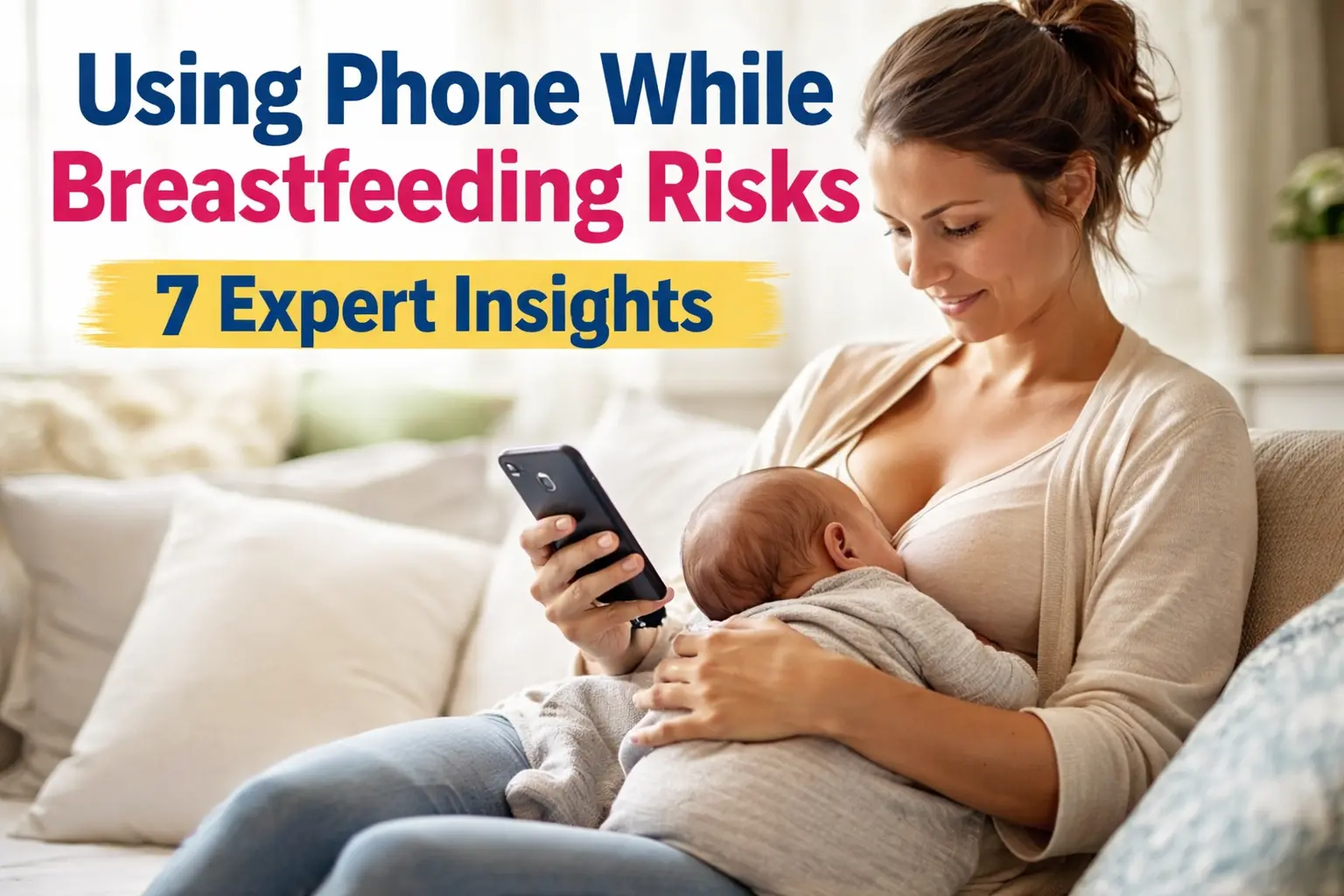
In today’s world, smartphones have become constant companions — even during sensitive moments like breastfeeding. But using phone while breastfeeding risks isn’t just gossip or parenting “shaming” — experts have carefully weighed benefits and drawbacks for both parent and baby.
This article explains 7 expert insights, backed by research, practical tips, emotional development considerations, and how to strike a balanced approach.
How AI Can Help Parents Manage Back-to-School Stress in 2025
What Does Research Say About Using Phone While Breastfeeding?
It’s common for parents to check messages, watch videos, scroll social media, or even check breastfeeding apps while nursing. While this may feel like a normal part of modern parenting, some studies show that looking at your phone significantly reduces eye contact and responsiveness during breastfeeding — which can affect bonding and emotional security.
Experts emphasize moderation and mindfulness — not prohibition — because a mother’s time is filled with real responsibilities and stress.
Expert Insight #1: Eye Contact is Critical for Bonding
Breastfeeding is more than nutrition — it’s a moment of connection. Babies rely on eye contact, facial expressions, and responsiveness as part of early emotional development. When a mother focuses on her phone instead of her baby, the baby’s ability to feel understood, safe, and emotionally connected can weaken over time.
This concept is one reason why pediatric specialists encourage parents to alternate moments of phone use with intentional eye contact and interaction.
Expert Insight #2: Attention Matters for Cues and Feeding Patterns
Babies communicate hunger, discomfort, or contentment through micro‑signals like head turning, tongue movements, and sucking rhythm. When a parent is distracted by a phone, these subtle cues can be missed — potentially leading to poorer milk transfer, fussiness, or feeding frustration.
Being attentive not only helps nutrition but strengthens trust and reinforces positive feeding patterns.
Expert Insight #3: Phones Can Interrupt Skin‑to‑Skin Contact
Skin‑to‑skin contact releases oxytocin — often called the “love hormone” — which supports bonding and milk let‑down. Looking at a phone breaks this physical closeness even if slightly, and reduces the hormonal and emotional benefits of breastfeeding.
Expert Insight #4: Radiation Worries — What the Science Says
One common concern is cellular radiation. Babies’ bones and tissues are thinner and more sensitive, so there’s speculation about harm from phone radiation. However, scientific evidence is currently unclear, and experts agree that more research is needed to conclude real physical risk from phone radiation during feeding.
That said, placing a phone away from the baby’s body — rather than directly on the lap — is a simple precaution many parents choose.
Expert Insight #5: Mental Health & Screen Use
Excessive phone use — especially scrolling social media — is linked with increased stress or worsening postpartum anxiety for some parents. That doesn’t mean phone use should be banned, but awareness matters.
Experts encourage mindful usage — purposeful checking instead of endless scrolling — to reduce negative impacts on sleep, mood, and parental focus.
Expert Insight #6: Balance and Practical Mindfulness Wins
Most professionals agree that balance is key. Mothers aren’t expected to abandon phones entirely — phones provide connection, self‑care, communication, and even educational resources. But being mindful — setting intentions — improves both parental well‑being and baby bonding.
For example:
- Start feeding with a few minutes of eye contact
- Check the phone only during settled feeding
- Use apps rather than mindless social media
- Avoid bright screens that distract baby
Expert Insight #7: AAP Breastfeeding Recommendations
The American Academy of Pediatrics recommends exclusive breastfeeding for about six months, followed by continued breastfeeding with solids for at least two years if desired. Feedings can be frequent and long — so parents do need moments of rest, comfort, or light distraction.
What matters most isn’t phone use itself but the quality of interactions during feeding time.
How AI Can Help Parents Manage Back-to-School Stress in 2025
Practical Tips to Balance Phone Use and Bonding
- Intentional Phone Time: Decide why you’re using your phone (calls, apps, messages) instead of mindless scrolling.
- Partial Engagement: Use your phone during the middle of feedings, but start and end by interacting with your baby.
- Put Phone at a Distance: Placing it away from baby reduces light and radiation exposure concerns.
- Use Audio Content: If you need distraction, consider podcasts or audiobooks — letting you still look at your baby.
The Emotional Side: It’s Okay to Take Care of Yourself
Parenting is demanding — and breastfeeding often feels like a long commitment of many hours every day. Many moms find comfort, support, and mental breaks with their phones — and you don’t have to feel guilty for that.
Experts stress that self‑care — even digital self‑care — helps parents remain resilient, calm, and emotionally present when it matters most.
Final Takeaway: Be Present, Be Mindful
While phones are part of modern life, the moments you spend breastfeeding don’t have to become screen time defaults. With small adjustments — eye contact, responsiveness, and purposeful phone use — you can maximize emotional connection with your baby and still have time to decompress.
Balance, awareness, and presence are what create the healthiest experience for both mom and baby.







Leave a Reply